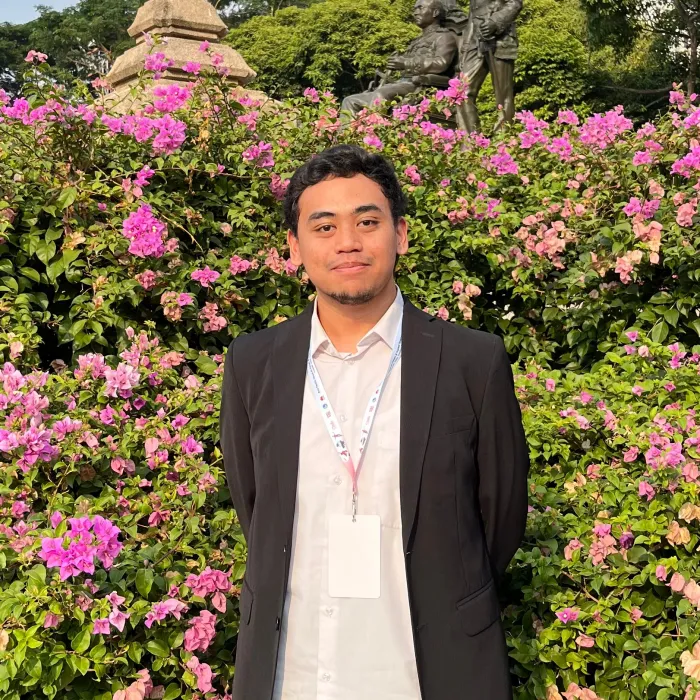
Journey to Bangkok: Huawei APAC 2024
In January 2025, I had the incredible opportunity to travel to Chulalongkorn University in Bangkok, Thailand, to represent Universitas Gadjah Mada on a regional stage. Our team, Hi-Flex, was competing in the Huawei Developer Competition 2024 Asia Pacific. It was an intense challenge that with over 660 teams from across the continent looking for a spot in the finals.
The atmosphere in Bangkok was electric. We weren’t just presenting a project; we were defending an innovation we had spent months perfecting back at the DTETI labs in Yogyakarta.
The Innovation: Hi-Flex
Our project was born from a simple but ambitious goal: creating a highly flexible ICT solution using Huawei Cloud to solve real-world industrial challenges. While many teams focused on purely software-based ideas, we pushed for a solution that integrated cloud-native capabilities with practical, scalable architecture.
As a developer on the team, I was responsible for the End-to-End integration of the solution. My focus was on crafting an intuitive Mobile Interface using React Native, ensuring a seamless user experience. On the technical side, I managed the Backend Integration, bridging the gap between the mobile client and our cloud infrastructure to ensure data consistency and low-latency performance.
The Competition Day
The final round was a “Live Demo” and presentation in front of a panel of international judges. There is a specific kind of pressure that comes with presenting and demonstrating a system in a foreign country, knowing you’re representing your university and country.
After a day of intense pitches and technical Q&A sessions, Team Hi-Flex was announced as the 1st Runner-Up in the Student Track.
Reflection
Working alongside Aufa Nasywa Rahman, Petrus Aria C. R., Larasati Kinanti, and Laurencia Otniel, I learned that technical skill is only half the battle. The other half is communication, synchronized teamwork, and the ability to pivot when things don’t go as planned during a deployment.
Winning this award wasn’t just about the prize; it was a validation that the engineering standards we hold ourselves to at UGM are competitive on a global level.